How Much Does Subfloor Ventilation Cost in Sydney? A Complete Price Guide
Why Subfloor Ventilation Matters for Sydney Homes
A damp subfloor can create serious problems inside a Sydney home, especially when moisture stays trapped under the floor for a long time. Homeowners may notice a musty smell, visible mould, cold rooms, or timber floors that feel soft, damp, or uneven.
In most Sydney homes, professional subfloor ventilation installation costs around $2,500 to $4,500 for a standard system. The final price depends on the size of the subfloor, the level of moisture, the access under the home, the number of fans required, and whether the property needs a passive or mechanical airflow setup.
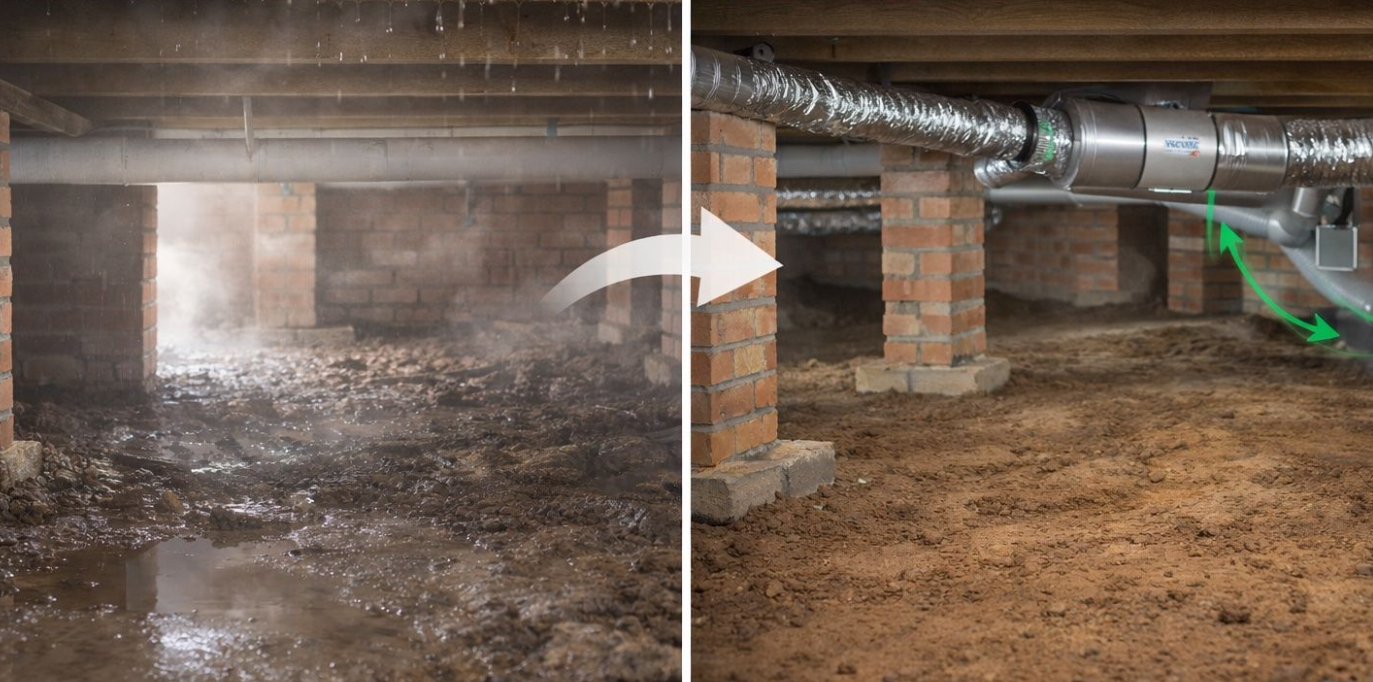
A well-designed Subfloor Ventilation System does more than move air. It helps remove damp, stale air from under the house and supports better airflow through the subfloor area. When the system is planned properly, it can help reduce moisture problems before they turn into larger mould, timber, or indoor air quality issues.

Why Does the Price Change From One Home to Another?
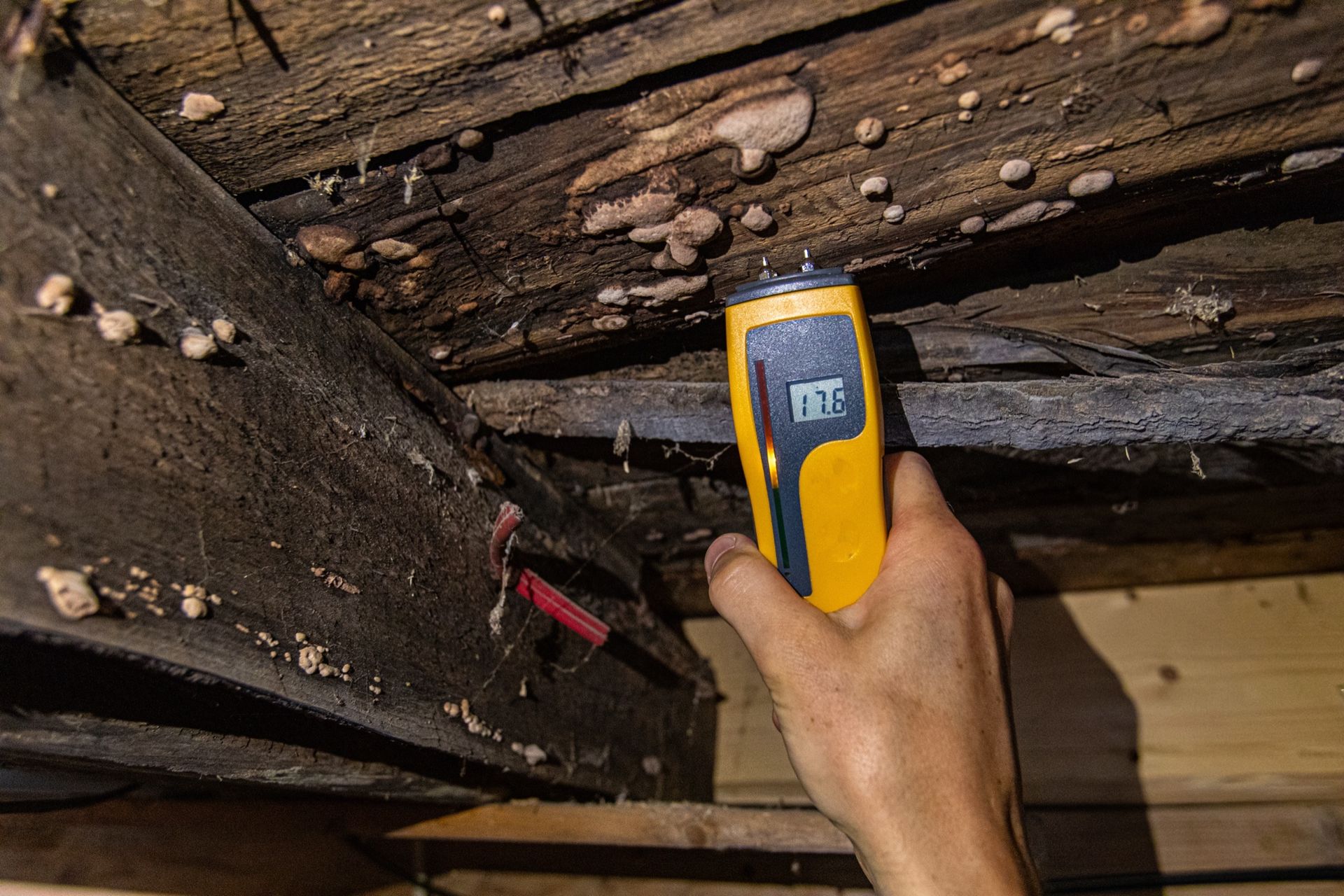
The price changes because every subfloor has a different size, shape, access level, and moisture condition. A small home with clear airflow may only need a simple setup, while a larger home with several damp zones may need multiple fans, longer ducting, and extra vent points. A proper Subfloor Moisture Inspection helps identify what is happening below the floor before any system is installed.
This is important because dampness may be caused by poor airflow, blocked vents, drainage problems, plumbing leaks, wet soil, or a mix of several issues. The cost may increase when the subfloor is hard to reach, the home has low clearance, the moisture level is high, or the system needs more fans and ducting. A clear inspection helps prevent guesswork and gives the homeowner a more accurate price.
What Is Included in a Professional Subfloor Ventilation Quote?
A professional quote should include more than the cost of a fan. It should explain what the installer will check, what equipment will be used, where the air will be moved, and how the system will help the home.
A proper quote may include the inspection, airflow planning, fan selection, ducting, vents, grilles, labour, electrical connection, and testing after installation. It may also include advice about drainage, blocked vents, or other moisture sources if ventilation alone will not solve the full problem.
This matters because a fan placed in the wrong area may run every day but still leave damp air trapped under the home. A good system should be designed around the actual airflow path, not placed only where installation is easiest.

What Sydney Home Conditions Can Increase the Cost
Sydney homes can face different moisture problems depending on their age, location, soil, and building layout. Homes near coastal areas may deal with higher humidity, while properties on sloped blocks may have damp spots where water gathers below one side of the house.
Older homes can also have blocked vents, limited crawl space, or extensions that reduce natural airflow. When the underfloor area is split into separate sections, the system may need more ducting or more than one fan to reach each damp zone.
The cost may increase when:
- The home has low or tight subfloor access
- The ground under the house stays wet after rain
- Existing wall vents are blocked, damaged, or poorly placed
- The property is close to the coast and deals with higher humidity
- The home sits on a sloped block where water gathers on one side
- The subfloor is divided into separate areas with poor cross-flow
- New vent openings or extra grilles need to be added
- Long ducting is needed to reach damp or trapped air zones
- More than one fan is needed to move air properly
- Drainage, soil moisture, and airflow issues are all involved
How Do We Install a Subfloor Ventilation Fan
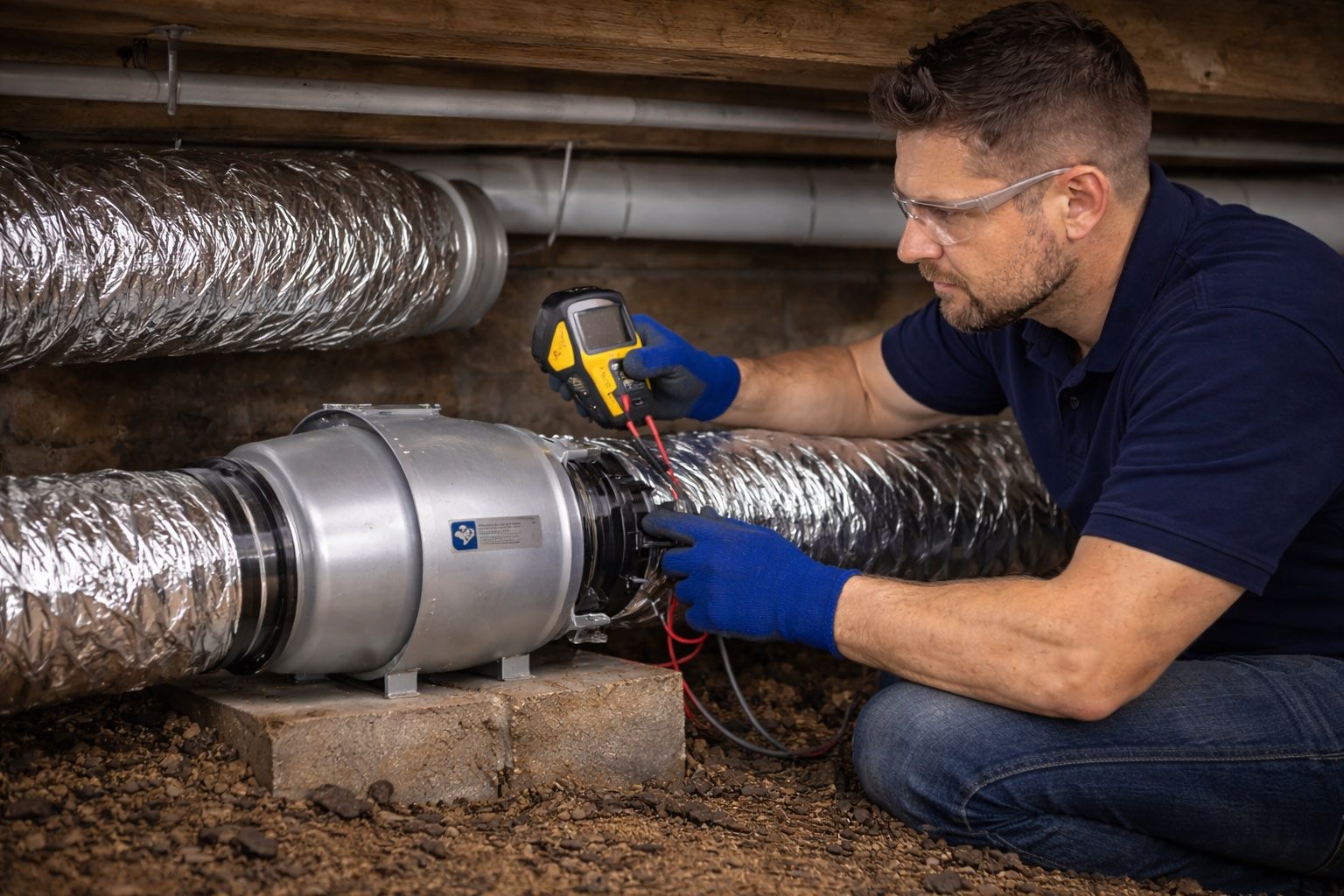
When people search for how to install a subfloor ventilation fan, they often expect a quick step-by-step answer. In reality, a good installation starts with checking the subfloor and understanding how air moves through that space. The installer first looks for damp soil, mould signs, wet timber, blocked vents, and areas where air is not moving. After that, they plan the best airflow path so the system can pull stale air from the damp zones and exhaust it outside the home.
The fan, ducting, vents, grilles, and controls are then installed in the right positions. Once the system is fitted, it should be tested to make sure air is moving in the correct direction and that the damp zones are being reached. This is why professional installation costs more than a simple fan kit.
What Problems Can Subfloor Ventilation Help Prevent?
Subfloor ventilation can help reduce the conditions that allow moisture problems to grow under a home. When damp air stays trapped below the floor, it can lead to musty smells, mould growth, timber decay, and poor indoor air quality. It can also make rooms feel colder or more humid, especially when moisture rises through gaps in floors or walls. Over time, damp timber may become soft, swollen, or more attractive to pests that prefer moist conditions.
A well-planned ventilation system helps move stale air out and supports a drier underfloor space. This does not mean every moisture issue will disappear overnight, but it can be an important part of protecting the home from ongoing damp-related damage.
How Do You Know If Your Home Needs a Subfloor Check
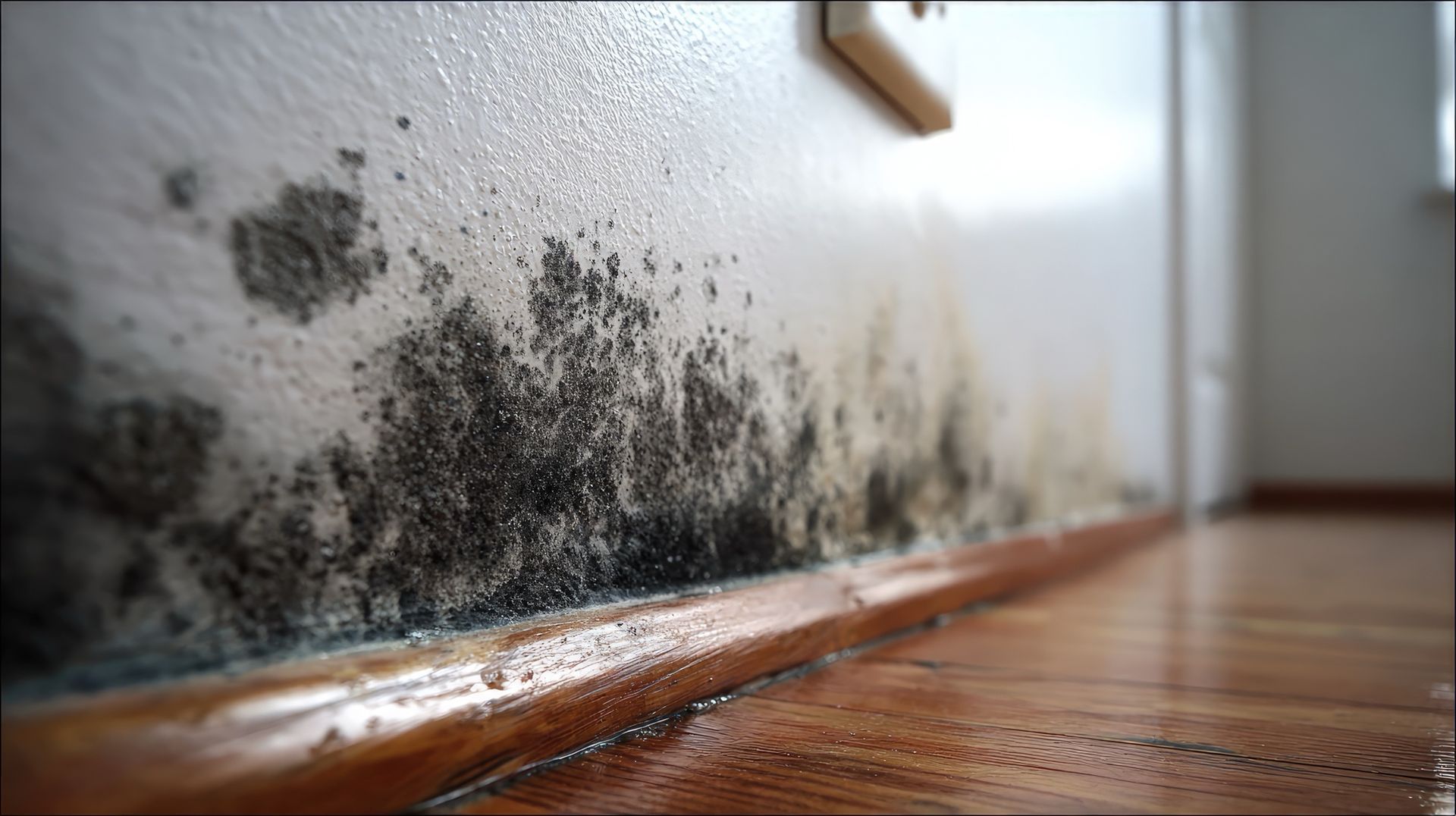
A home may need a subfloor check when damp signs keep coming back, even after cleaning or airing out the rooms. Common signs include musty smells, mould near skirting boards, damp floorboards, soft timber, condensation, or cold rooms that feel heavy and stale. A Free Mould Inspection can help identify whether visible mould or odour is linked to damp air below the home. This is useful because mould can come from poor ventilation, leaks, drainage issues, or indoor moisture problems.
Guessing the cause can lead to the wrong solution. A fan may not help if the main problem is a leak, and mould treatment alone may not last if damp air keeps rising from below the floor.
Find Out the Real Cost of Subfloor Ventilation Installation in Sydney
Online price ranges are useful, but the real cost of subfloor ventilation depends on the condition of your home. A small and open subfloor may need a simple system, while a large or damp space may need more fans, more ducting, and a more detailed design.
We can inspect the moisture, airflow, access, and damp areas under your home before recommending the right option. This gives you a clearer price and a better plan for dealing with the problem.
Book a subfloor inspection with Rapid Vent Systems and find out what your Sydney home needs before moisture causes more damage.